

I spent 12 minutes every morning staring at a closet full of clothes, feeling overwhelmed. That stopped when I cut my work wardrobe to exactly 20 items. The result: mornings dropped from 12 minutes to 2. I spent $1,470 total. Here is exactly how the system works, what I bought, and the three rules that prevent it from failing.
The Core Problem: Decision Fatigue Starts Before You Leave the House
Every choice you make in the morning drains mental energy. By the time you pick socks, you have less bandwidth for actual work decisions. This is not abstract psychology — it is documented in studies on ego depletion. A 2011 study in the Journal of Consumer Research found that people who made a series of small choices (like what to wear) performed worse on subsequent cognitive tasks.
The 20-item wardrobe removes 95% of those choices. You are not deciding what to wear. You are grabbing the next piece in a system that already works.
Why 20 Items Works Better Than 10 or 50
Ten items is too restrictive for most office environments. You end up doing laundry every three days. Fifty items is just a smaller version of the original problem — too many options. Twenty items hits the sweet spot: you get 7-10 days between laundry cycles, enough variety to avoid boredom, and a constraint tight enough that every piece must earn its place.
The Exact Ratio I Used
My 20 items break down this way:
- 5 tops (3 silk blouses, 2 fine-gauge cotton sweaters)
- 3 bottoms (2 trousers, 1 pencil skirt)
- 3 dresses (2 sheath, 1 wrap)
- 2 blazers (1 black, 1 navy)
- 2 pairs of shoes (1 low heel, 1 flat)
- 2 outer layers (1 trench coat, 1 cardigan)
- 3 accessories (1 belt, 1 scarf, 1 structured tote)
That is 20 pieces. No more. No less. Every item coordinates with at least 3 others.
How I Selected Each Piece — The Three Tests

I did not just grab things from my existing closet. I started from zero and applied three tests to every candidate piece. If it failed any test, it did not make the cut.
Test 1: The Color Palette Lock
Every piece must fall into one of four colors: black, navy, cream, or camel. That is it. No red blazers. No printed blouses. The palette is deliberately boring because boring creates instant coordination. I can grab any top and any bottom and they match. No thinking required.
Real example: The Everlane Cashmere Crew in cream ($128) works with the Theory trousers in black ($295) and the Madewell skirt in navy ($88). Three pieces, three outfits, zero friction.
Test 2: The 3-Outfit Minimum
Each piece must be able to create at least three distinct outfits. The Uniqlo Rayon Blouse ($39.90) pairs with trousers for client meetings, with the pencil skirt for office days, and under the cardigan for casual Fridays. If a piece only works one way, it does not earn its slot.
Test 3: The Dry Cleaner Rule
No more than 3 pieces can require dry cleaning. The rest must be machine-washable on cold and hang-dry. Silk blouses from Quince ($49.90 each) pass because they are washable. A wool Theory blazer ($395) is one of the three dry-clean items. This keeps maintenance realistic. If you have to dry clean 8 pieces, the system breaks.
The Exact Brands and Prices in My Wardrobe
Here is exactly what I bought and what it cost. No hypotheticals.
| Item | Brand | Price | Color |
|---|---|---|---|
| Silk Blouse | Quince | $49.90 | Cream |
| Silk Blouse | Quince | $49.90 | Navy |
| Silk Blouse | Everlane | $98.00 | Black |
| Cashmere Crew | Everlane | $128.00 | Cream |
| Cotton Sweater | Uniqlo | $39.90 | Navy |
| Trousers | Theory | $295.00 | Black |
| Trousers | Banana Republic | $120.00 | Camel |
| Pencil Skirt | Madewell | $88.00 | Navy |
| Sheath Dress | MM.LaFleur | $195.00 | Black |
| Sheath Dress | Quince | $79.90 | Navy |
| Wrap Dress | Diane von Furstenberg | $298.00 | Camel |
| Blazer | Theory | $395.00 | Black |
| Blazer | J.Crew | $198.00 | Navy |
| Low Heel Pump | Clarks | $110.00 | Black |
| Ballet Flat | Rothy’s | $165.00 | Navy |
| Trench Coat | London Fog | $185.00 | Camel |
| Cardigan | Uniqlo | $49.90 | Cream |
| Belt | Madewell | $48.00 | Black |
| Scarf | Acne Studios | $190.00 | Navy |
| Tote Bag | Everlane | $175.00 | Black |
| Total: $1,467.50 | |||
Verdict: The Quince silk blouses ($49.90 each) are the best value in this entire list. They wash well, do not wrinkle badly, and look like $150 blouses. The Theory blazer ($395) is the biggest single expense but it is the piece that makes every outfit look intentional. Skip the Acne Studios scarf ($190) if you need to cut budget — a Uniqlo scarf for $19.90 works fine.
Common Mistakes That Break a 20-Item Wardrobe
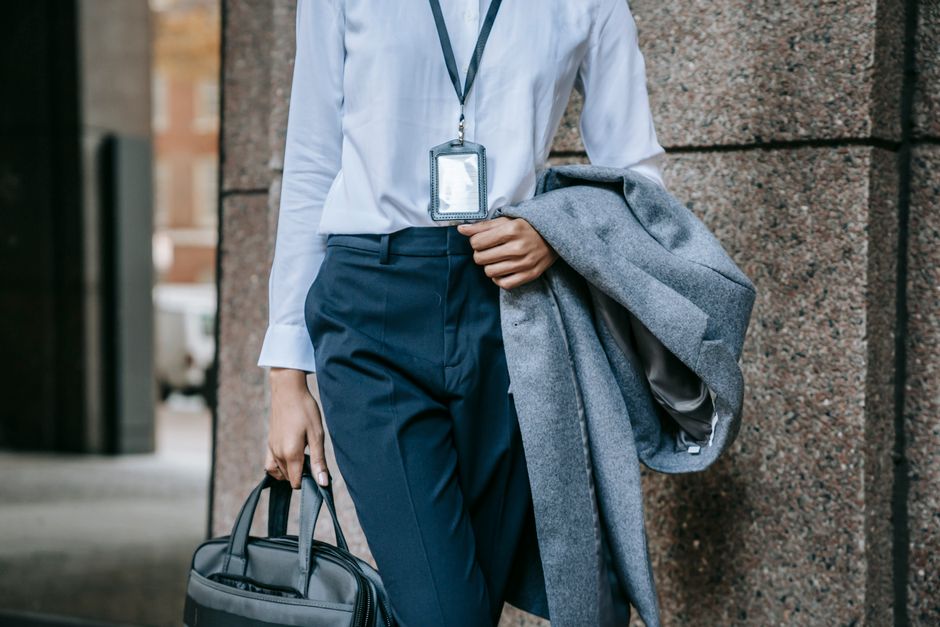
I made three mistakes during the first month. They nearly derailed the whole system.
Mistake 1: Buying for the Fantasy Self
I almost bought a fitted white blazer. It looked great on the rack. But I do not wear fitted white blazers. I wear black and navy. The white blazer would have sat unworn, taking up one of my 20 slots. Do not buy for who you want to be. Buy for who you actually are on a Tuesday morning.
Mistake 2: Ignoring Laundry Logistics
I originally included two silk blouses that required hand washing. After the third time I ruined one in the machine, I replaced them with the Quince washable silks. If you cannot wash it on cold and hang it to dry, do not buy it for a capsule wardrobe. The system depends on quick turnaround.
Mistake 3: Forgetting Seasonal Variation
My first version had no layering pieces for summer. The cashmere sweater was useless in July. I now rotate two pieces seasonally: the cashmere sweater swaps for a linen blazer (Uniqlo, $49.90) in summer, and the trench coat swaps for a lighter cotton jacket (Everlane, $98). The total stays at 20 items, but 2 pieces change with the weather.
When a 20-Item Wardrobe Is the Wrong Choice
This system works for specific conditions. If those conditions do not apply to you, do not force it.
You Travel Frequently for Work
If you are on a plane every week, you need a separate travel capsule. The 20-item wardrobe assumes you are home most nights. Frequent travelers need 10 items that pack small and 10 items that stay home. Two separate systems. Do not try to merge them.
Your Office Has a Strict Uniform Policy
If your employer requires specific colors or branded clothing, the 20-item wardrobe becomes 10 items that meet the policy and 10 items that are useless. In that case, build a 10-item uniform and call it done. The Everlane Uniform ($98 for a pair of trousers, $68 for a button-down) is a better fit.
You Have a Physically Demanding Job
Silk blouses and wool trousers do not survive warehouse work or restaurant shifts. This wardrobe is for desk jobs. If your work involves movement, sweat, or dirt, buy performance fabrics. The Lululemon Commission Pant ($128) and a Uniqlo Airism top ($19.90) will outperform any silk blouse.
How to Start Your Own 20-Item Wardrobe in One Weekend
Here is the exact process I used. It takes a Saturday afternoon.
Step 1: Pull Everything Out
Empty your closet onto the bed. Every single piece. You will see how much you actually own. Most people have 60-100 items. That is the problem.
Step 2: Apply the Three Tests
Go through each piece. Does it fit your color palette? Can it create 3 outfits? Can you wash it easily? If it fails any test, it goes into the donate pile. Be ruthless. I discarded 42 items in my first pass.
Step 3: Fill the Gaps
You will end up with 8-12 keepers. That is normal. Now you need 8-12 more. Use the table above as a starting point. Buy the Quince silk blouses first — they are cheap and versatile. Then the Theory trousers. Then everything else.
Step 4: Wear the System for Two Weeks
Do not change anything for 14 days. You will discover gaps. Maybe you need one more pair of shoes. Maybe a blazer is too warm. Adjust exactly one piece at a time. Do not overhaul again. Small tweaks only.
The result is not just a wardrobe. It is a morning routine that takes two minutes. No staring. No deciding. Just grab and go.