
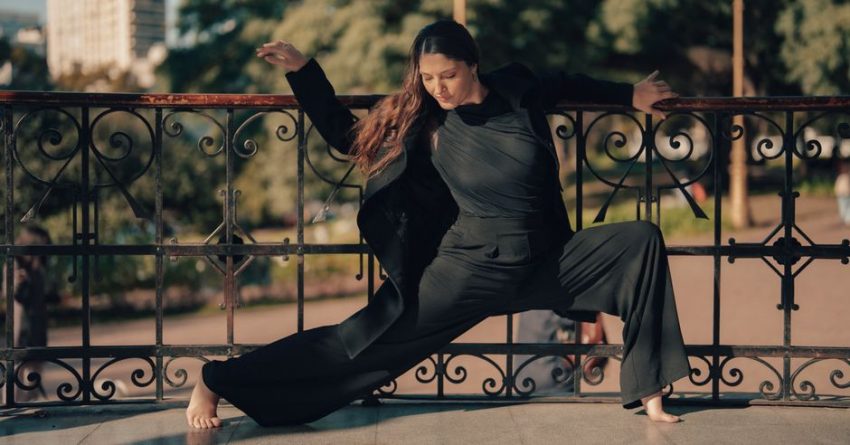
You order a size 14 online. It arrives. The shoulders fit, but the waist gapes. Or the hips are perfect, but you can’t button it over your chest. You’re not the problem. The clothes are.
Standard sizing in fashion is built around a mythical ‘average’ body — usually a sample size 2 or 4. That model fits maybe 5% of women. The rest of us? We get to play a frustrating game of ‘which part of my body will this garment fit best?’
Inclusive sizing isn’t a trend. It’s a correction to a broken system. This guide shows you exactly how to find clothes that fit your body, which brands actually do this right, and why the industry is finally changing.
What Inclusive Sizing Actually Means (And What It Doesn’t)
Inclusive sizing means a brand offers a range that covers the majority of real human bodies. Not just expanding from 0-12 to 0-20. Real inclusive sizing considers height, proportion, and shape variation across the entire size spectrum.
Universal Standard is the gold standard here. They offer sizes 00-40 in most styles. Their size chart is based on 10,000 real body scans, not industry averages. A size 20 from Universal Standard fits differently than a size 20 from a brand that just graded up a size 8 pattern.
Here’s what inclusive sizing is NOT:
- Just adding XL and 2XL to the same patterns that failed at size 18
- Using ‘vanity sizing’ (where a size 12 is actually a 16) to make people feel better
- Offering one ‘plus’ line that’s separate from the main collection
The real problem is grade rules. Most brands take a size 4 pattern and mathematically scale it up. A woman who wears a size 20 has a different body shape than a scaled-up size 4. Her shoulders are proportionally narrower. Her waist-to-hip ratio is different. Grade rules need to change for each size cluster.
Eileen Fisher does this well. Their ‘Washable Stretch Crepe’ pants ($198) come in sizes XXS-3X, but the pattern is adjusted at each size break. The size 2X pant isn’t just a bigger size 18. The rise changes. The thigh width changes proportionally.
Why Most Brands Still Get It Wrong
Three reasons. And none of them are about ‘it’s too hard.’
1. Cost of pattern-making. Creating separate patterns for petite, regular, and tall across 20+ sizes means 60+ patterns per style. Most brands cut corners and use one pattern scaled up. The result? Pants that are too long for shorter women, too short for tall women, and baggy in the wrong places for curvy bodies.
2. Retail inventory risk. Stores hate having unsold inventory. Size 0 and 2 sell out fast. Size 18 and 20 sit on racks. So brands stock fewer of them. This creates a self-fulfilling prophecy: ‘We tried plus sizes, they didn’t sell.’ Translation: we stocked one rack of size 20 in ugly prints and wondered why no one bought them.
3. Fit model bias. Most fit models are 5’8″ to 5’11”, a size 2-4, with a straight body shape. Garments are designed on that body. Then graded up. This is why a size 16 dress often has armholes cut for a much smaller frame — the original pattern never considered a larger bicep circumference.
The fix is straightforward. Brands need to use multiple fit models across the size range. Girlfriend Collective uses fit models in sizes XS through 6XL for their leggings. Their compressive fabric ($68 for the ‘Compressive High-Rise Legging’) is tested on each body type to ensure the waistband doesn’t roll down on a curvier frame.
How to Find Your Actual Size (Ditch the Number on the Tag)
Stop trusting the size number. It’s a lie.
Here’s the step-by-step method that actually works:
Step 1: Take your measurements naked. Use a soft tape measure. Measure your bust (fullest part), waist (narrowest part, usually above your belly button), hips (fullest part, about 8-9 inches below your waist), and inseam (crotch to floor). Write these down in inches.
Step 2: Ignore the brand’s size chart at first. Instead, look for the ‘garment measurements’ — the actual dimensions of the finished piece. Big Bud Press (sizes XS-5X) publishes garment measurements for every single item. Their ‘Work Pants’ ($70) show the waist measurement, hip measurement, and rise for each size. Compare your body measurements to the garment, not the size label.
Step 3: Account for ease. You need 1-2 inches of ease (extra room) in woven fabrics. Stretch fabrics need less — about 0.5 inches. If you’re between sizes, go up for woven, down for stretch.
Step 4: Check the fabric content. A cotton shirt with 2% spandex behaves differently than 100% cotton. Madewell jeans ($128) with 1% elastane stretch about 0.5 inches. Their 100% cotton denim has zero stretch. You need the size chart for the specific fabric, not the generic brand chart.
| Body Measurement | How to Measure | Common Mistake |
|---|---|---|
| Bust | Fullest part, tape parallel to floor | Measuring too tight — tape should sit on skin, not compress |
| Natural Waist | Narrowest point, usually above belly button | Measuring at belly button (that’s your low waist) |
| Hips | Fullest part, 8-9 inches below waist | Measuring at hip bone instead of fullest curve |
| Inseam | Crotch seam to floor, barefoot | Measuring with shoes on (adds 1-2 inches) |
Brands That Actually Do Inclusive Sizing Right (And What to Buy)
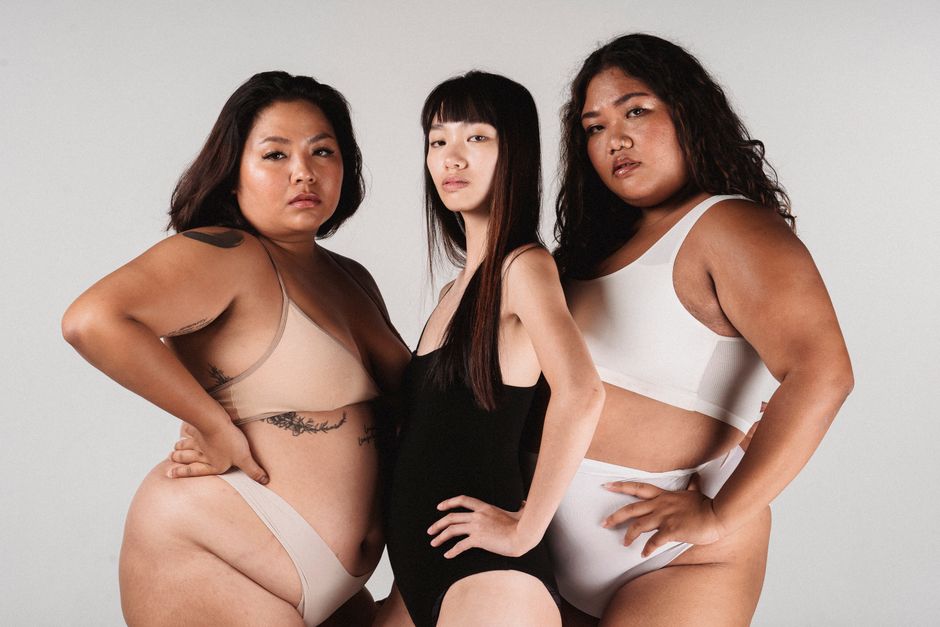
Not all ‘inclusive’ brands are equal. Here are the ones that pass the fit test.
Universal Standard — Sizes 00-40. Their ‘Seine’ jeans ($95) are engineered with different rise options for different size clusters. The size 20 has a 1-inch longer rise than a size 14. They also have a ‘Fit Liberty’ program: if your size changes within a year, they exchange your unworn items for free. Verdict: best for denim and workwear.
Girlfriend Collective — Sizes XXS-6XL. Their ‘Paloma’ bra ($38) and ‘Compressive High-Rise Legging’ ($68) are tested on multiple body types. The waistband has a hidden drawcord, so it adjusts to your exact waist measurement. Verdict: best for activewear and loungewear.
TomboyX — Sizes XS-6X. Their ‘9-Inch Essential Trunk’ ($28) and ‘Soft-Built Bralette’ ($42) use a unique sizing system based on band and cup, not generic S/M/L. The fabric is a cotton-modal-spandex blend that holds shape without digging in. Verdict: best for underwear and basics.
Big Bud Press — Sizes XS-5X. Their ‘Work Pants’ ($70) and ‘Western Shirt’ ($64) are unisex and cut with straight proportions. The waist is the same measurement across the size range — no vanity sizing. Verdict: best for structured, non-stretch garments.
Good American — Sizes 00-32. Their ‘Good Legs’ jeans ($99) come in three fits: ‘Always Fits’ (adjustable waistband), ‘Curve Hug’, and ‘Straight’. Each fit is patterned differently. The ‘Always Fits’ waistband has elastic that adjusts up to 2 sizes. Verdict: best for jeans with body shape variation.
When Buying Inclusive Sizing Doesn’t Help (And What to Do Instead)
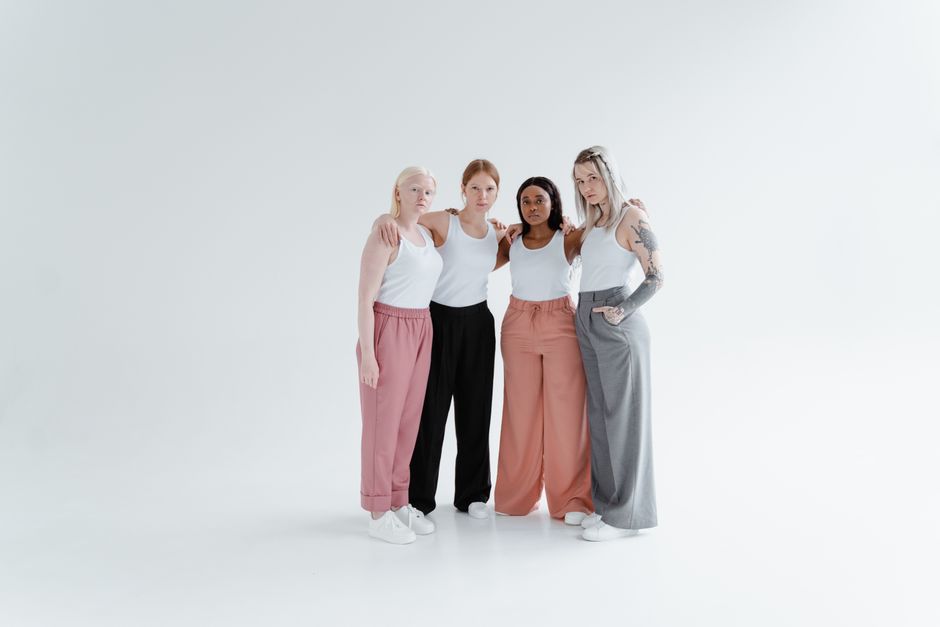
Inclusive sizing alone isn’t a magic fix. Here’s when it fails — and what actually works.
Problem: You’re very tall or very short. A brand can offer sizes 00-40, but if the inseam is 28 inches on every size, it won’t work for a 6-foot woman. ASOS Curve offers tall and petite options within their plus range. Their ‘Tall Curve’ jeans ($45) have a 34-inch inseam. Their ‘Petite Curve’ has a 27-inch inseam. Check the specific length options, not just the size range.
Problem: You have a large bust with a smaller frame. A size 14 dress from Lane Bryant ($70) is cut for a fuller bust and wider shoulders. If you’re a 34H with a size 10 frame, that dress will be baggy everywhere else. Solution: look for brands that sell separates (jackets and skirts separately) or brands like Pepper (sizes XXS-4X, specifically for smaller frames with larger busts).
Problem: You need structured tailoring. Inclusive sizing works best for stretchy, forgiving fabrics. For a wool blazer or structured dress, you need alterations. No off-the-rack brand, no matter how inclusive, can fit every shoulder width and arm length perfectly. Budget $30-50 for a tailor. It’s worth it.
The real failure mode? Buying a size 22 from a brand that just scaled up a size 4 pattern. The fit will be wrong. Return it. Demand better. Brands change when we stop accepting bad fit as ‘normal.’