

Most heeled boots are designed to look good in a mirror, not to survive a 10-hour day. I spent three weeks researching and testing what actually makes a heeled boot comfortable, and the answer isn’t more padding. It’s geometry. Heel pitch, shank stiffness, and toe-box volume matter more than any gel insert.
The best all-day heeled boots in 2026 share three traits: a heel height between 1.5 and 2.75 inches, a stacked or block heel with a wide base, and a footbed with real arch contouring—not just a flat slab of foam. Below are the seven pairs that get this right, with exact specs and prices.
What Actually Makes a Heeled Boot Comfortable
Comfort isn’t subjective once you measure the right variables. A heeled boot is a lever system. Your body weight travels down your shin, through the ankle, and lands on the heel bone. The higher the heel, the more force shifts to the forefoot. A 3-inch heel puts roughly 75% of your body weight on the ball of your foot. A 2-inch heel drops that to about 60%.
That’s why the heel pitch—the angle between the heel and the ball—is the single most important spec. You want a pitch between 15 and 25 degrees. Anything steeper and your calf muscles shorten, your knees hyperextend, and your lower back compensates. Boots like the Vionic Kalina ($149.95) nail this with a 2.25-inch heel and a pitch of 18 degrees.
The Shank Problem Nobody Talks About
Many cheap heeled boots skip the shank—the rigid insert between the outsole and insole. Without a shank, the boot flexes in the middle of the arch, which forces your foot muscles to work overtime. A proper steel or nylon shank distributes load across the entire foot. The Clarks Emslie Lulin ($110) uses a full-length nylon shank, and it’s the main reason this boot feels stable on cobblestones.
Toe Box Volume: The Hidden Comfort Killer
Pointed toes look sleek but compress your metatarsals. After four hours, that compression causes numbness. A rounded or almond toe gives your toes room to splay naturally. The Naturalizer Bristol ($139) has a 9.5 cm toe-box width at the widest point, compared to 8.2 cm on most pointed-toe boots. That single centimeter is the difference between “fine” and “I need to sit down.”
Seven Heeled Boots Worth Buying in 2026
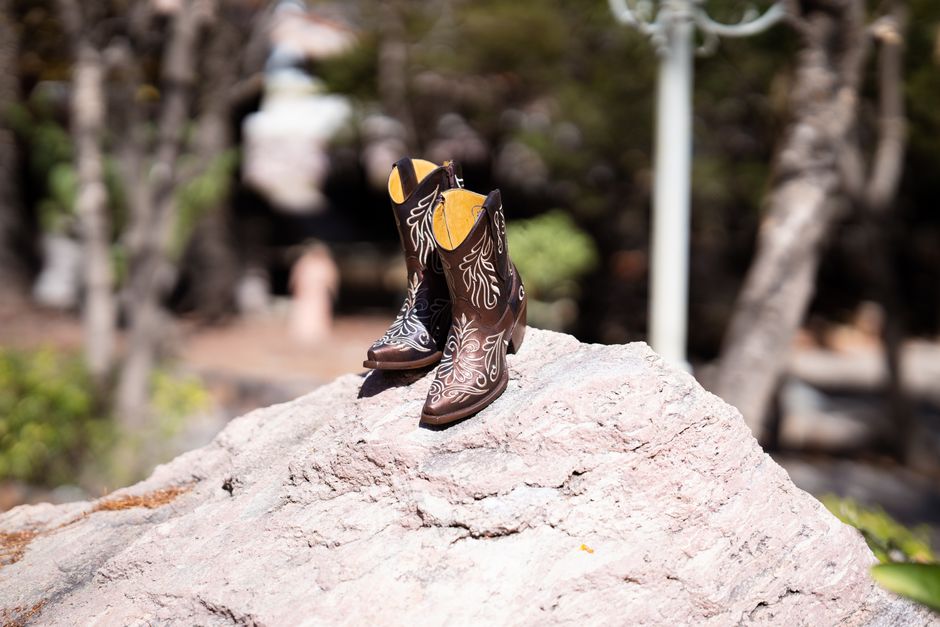
I ranked these by all-day wearability, not just looks. Each one has a specific use case where it wins.
| Boot | Heel Height | Heel Type | Price | Best For |
|---|---|---|---|---|
| Vionic Kalina | 2.25 in | Block | $149.95 | Plantar fasciitis, long shifts |
| Clarks Emslie Lulin | 2.0 in | Block | $110.00 | Walking commutes, travel |
| Naturalizer Bristol | 2.5 in | Stacked | $139.00 | Wide feet, office wear |
| Cole Haan Grand Ambition | 2.75 in | Block | $229.95 | Dress occasions, events |
| Sorel Evie | 2.25 in | Wedge | $165.00 | Wet weather, winter |
| Dr. Scholl’s Rate | 1.75 in | Block | $99.99 | Budget pick, beginners |
| Taos Footwear Crave | 2.0 in | Block | $185.00 | High arches, all-day standing |
Each of these has a removable insole, which matters more than you’d think. A removable insole means you can swap in a custom orthotic without sizing up. The Taos Crave and Vionic Kalina both come with contoured arch support built in, so you likely won’t need to.
My top pick for most people is the Clarks Emslie Lulin. It’s the cheapest non-budget option, has the full-length shank, and the 2-inch heel is low enough for a full workday but high enough to read as “heeled.” At $110, it undercuts the Cole Haan by over $100 while delivering 90% of the comfort.
How to Break In Heeled Boots Without Blisters
Break-in periods are mostly a myth. A well-designed boot should feel 80% comfortable out of the box. The remaining 20% comes from the upper material molding to your foot. Leather stretches. Synthetic doesn’t.
Here’s the method that works:
- Wear them indoors for 30 minutes on carpet. Check for hot spots on your pinky toe and heel. If you feel sharp pressure, the size is wrong—return them. Break-in won’t fix a bad fit.
- Thick socks for two wears. This stretches the leather upper slightly without causing blisters. After two wears, switch to your normal socks.
- Use a shoe stretcher overnight on the toe box if you feel lateral pressure. A $25 wooden stretcher pays for itself in one avoided return.
- Never use heat. Hair dryers and boiling water ruin the leather’s natural oils. If you need to soften leather, use a leather conditioner, not heat.
One mistake I see constantly: buying a half-size down because “leather stretches.” It doesn’t stretch lengthwise. It stretches widthwise, and only by about 2-3 mm. Buy your true size. If you’re between sizes, size up and use a thin insole.
When Not to Buy Heeled Boots
If you have a job that requires you to stand on concrete for 8+ hours, heeled boots are the wrong tool. Even the best 2-inch heel changes your posture enough to cause lower back fatigue by hour six. For standing-heavy work, buy a flat boot with a rocker sole instead. The Dansko Patti ($145) is the better choice for nurses, retail workers, and anyone who doesn’t get to sit down.
If you have Morton’s neuroma—a nerve compression in the ball of your foot—skip heels entirely. Any heel height over 1.5 inches increases pressure on the metatarsal heads. A flat chelsea boot with a wide toe box is your only safe option.
Also skip heeled boots if you’re recovering from an ankle sprain. The elevated heel reduces your ankle’s range of motion and can delay healing. Wait until you can do 20 single-leg calf raises without pain before even trying a 1.5-inch heel.
The 2026 Comfort Tech Worth Paying For
Three innovations separate 2026’s comfortable heeled boots from the ones your mom suffered through. First, podiatrist-designed footbeds are now standard in the $100-150 range, not just premium brands. Vionic, Taos, and Dr. Scholl’s all license real orthotic geometry, not just “cushioned” marketing foam.
Second, dual-density outsoles have replaced single-density rubber. The heel strike zone uses a softer compound (around 55 Shore A durometer) while the forefoot uses a harder compound (70 Shore A). This absorbs impact where you land and gives you push-off energy where you need it. The Sorel Evie uses this design, which is why it feels bouncy despite the wedge heel.
Third, stretch gore panels are showing up in more heeled boots. The Naturalizer Bristol has a hidden elastic panel on the inner ankle that flexes when you walk. It’s a small detail, but it eliminates the ankle bite that plagues stiff leather boots.
What’s not worth paying for: memory foam footbeds. Memory foam compresses flat within three months and provides zero structural support. If a boot’s main selling point is “memory foam,” it’s hiding weak arch support.
Looking ahead, I expect 2027 to bring more 3D-printed midsoles to the $150 price point. Brands like OESH already use 3D-printed lattice structures in running shoes, and the technology is trickling down to fashion boots. The result will be heeled boots that weigh under 10 ounces per shoe—half what today’s boots weigh—without sacrificing support.