
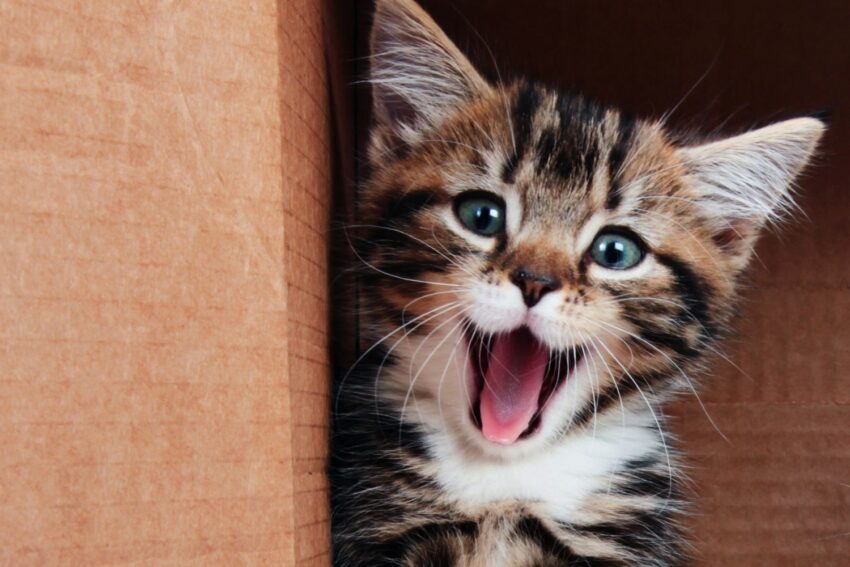
I’ve been a fashion editor for twelve years. I own a Balenciaga Le Cagole that cost more than my first car, a rack of vintage silk blouses I treat like museum pieces, and a three-year-old rescue cat named Miso who has, on separate occasions, vomited on all three. If you’re reading this because you’re considering a kitten and you also care deeply about what you wear, I have some hard-earned truths for you. This isn’t about whether you should get a cat — you should. This is about how to do it without losing your mind or your wardrobe.
Your cashmere is going to die. Plan accordingly.
I’m not being dramatic. Kittens have needle-sharp claws that they do not control, and they are biologically programmed to climb soft, warm things. Cashmere is the softest, warmest thing in your closet. Math is math.
Save these fabrics. Sacrifice these.
Cashmere, mohair, and angora — these are cat magnets. Miso destroyed a $400 N.Peal turtleneck in three minutes flat. The claw holes aren’t the problem. It’s the pilling. Cats knead (that rhythmic paw-pushing they do when they’re happy) and their rough paw pads will turn a smooth cashmere sweater into a fuzzy mess in a single cuddle session.
Silk and satin — fine for a cat that doesn’t scratch, but kittens scratch everything. A single snag from a claw can run the entire length of a silk dress. I lost a vintage YSL blouse this way.
Save these: thick denim, cotton canvas, wool tweed (the texture is too rough for them to enjoy), and anything made of leather. My Acne Studios leather jacket has survived Miso’s entire kittenhood without a mark. Leather is too smooth and tough for their claws to get purchase on.
Store your good stuff like you’re a museum curator
I use IKEA KVISSLE storage boxes ($15 each, sold in packs of four) for off-season cashmere. They’re clear plastic, stackable, and have a lid that snaps shut. Cats cannot open them. I also bought a garment rack from Amazon Basics ($45) and put it in the guest room — the one room the cat doesn’t have access to. Everything I truly love goes in there. Everything else lives in the main closet and accepts its fate.
One more thing: never leave a cashmere throw on the sofa. Ever. That’s not a blanket, it’s a scratching invitation.
Scratching is not optional. Redirect it.
You cannot train a cat not to scratch. Scratching is hardwired — it removes the dead outer layer of their claws, marks territory with scent glands in their paws, and stretches their back muscles. If you don’t provide an acceptable surface, they will find one. That surface will be your sofa, your bed frame, or your favorite pair of boots.
The only scratching post that actually works
After testing seven different posts, I landed on the SmartCat Pioneer Pet Ultimate Scratching Post ($40 on Chewy). It’s 32 inches tall, wrapped in dense sisal rope, and has a solid wood base. Most posts are too short — a cat needs to fully stretch to get the muscle benefit, and if the post is under 30 inches, they’ll use your couch instead. This one is tall enough for even a long-bodied cat like a Maine Coon.
Don’t buy: the cardboard scratch pads that lie flat on the floor. Cats prefer vertical surfaces. Also avoid anything with carpet material — it teaches them that carpet is okay to scratch, and then your wall-to-wall becomes a target.
Placement matters more than the post itself
Put the scratching post next to whatever they’re already scratching. If your kitten goes for the arm of your sofa, move the post directly in front of that arm. Cover the sofa arm with double-sided tape (I use Sticky Paws, $12 for two rolls) for a few weeks. The tape feels unpleasant on their paws. The post feels good. They’ll switch.
Pet hair on black clothes: the real solution
This is the question I get asked most often. “How do you wear black without looking like you live in a fur coat?” The answer is not a lint roller. Lint rollers work fine for one outfit, but they’re wasteful (the sheets), they run out at the worst moment, and they don’t remove deeply embedded hair from wool or knits.
The ChomChom Roller is the only answer
The ChomChom Pet Hair Remover ($25 on Amazon) is a reusable roller that uses static electricity and a directional brush to lift hair. You roll it back and forth, open the chamber, and dump the collected hair into the trash. No sticky sheets. No refills. It works on upholstery, bedding, and car seats too. I’ve had mine for three years and it still works as well as the day I bought it.
For delicate fabrics: use a lint brush (the velvet kind, like the Conair Fabric Shaver + lint brush combo, $12). The brush lifts hair without damaging silk or fine knits. The roller can be too aggressive for thin silk.
Fabric choice is prevention
I stopped buying black wool-blend trousers. They attract hair like a magnet. Instead, I buy ponte knit or cotton twill — the smooth surface means hair slides right off. My go-to black trousers right now are the Uniqlo Smart Ankle Pants ($50, cotton-poly blend). I can brush them off with my hand in two seconds. My old Rag & Bone wool trousers ($300) required ten minutes with the ChomChom and still looked fuzzy.
Your skincare and perfume need a rethink
This one surprised me. I didn’t realize that my expensive skincare and perfume were potentially dangerous to my cat until Miso had a reaction to a scented candle I’d left burning in the bathroom.
Essential oils are not safe for cats
Many essential oils — tea tree, peppermint, eucalyptus, citrus, lavender — are toxic to cats. Their livers lack the enzyme to metabolize these compounds. Even diffusers can cause respiratory irritation, drooling, vomiting, or worse. I switched to unscented candles (the IKEA SINNLIG unscented tealights, $3 for 100) and stopped using my Le Labo Santal 26 classic candle in rooms the cat frequents. I now burn it only in my home office with the door closed.
Perfume application: keep it away from their nose
Cats have an extremely sensitive sense of smell. Spraying perfume on your neck and then letting the cat snuggle into your neck can irritate their respiratory system. I apply perfume (I use Byredo Gypsy Water, $290) on my wrists and behind my knees — areas Miso doesn’t rub against. I also wait ten minutes after applying before I pick up the cat. By then, the alcohol has evaporated and the scent is less intense.
Lily flowers will kill your cat
I cannot stress this enough. Lilies (any part of the plant — petals, pollen, leaves, even the water in the vase) cause acute kidney failure in cats. A cat can die within 24-72 hours of ingesting a single petal. I used to keep fresh lilies in my living room. I don’t anymore. I now buy roses, sunflowers, or orchids, which are safe. If you receive a bouquet with lilies, remove them immediately and wash your hands. The pollen can transfer from your hands to the cat.
The first 48 hours: a survival plan
Bringing a kitten home is chaotic. They’re scared, they’re curious, and they will find every single thing you forgot to put away. Here’s what I wish someone had told me.
Before you bring the kitten home
- Secure all cords. Kittens chew on charging cables. I lost an iPhone charger, a laptop cord, and a pair of wired headphones before I bought a cord management kit from Amazon ($12 for 30 feet of split tubing). Run all cables through the tubing. It’s cheap and it prevents electrocution.
- Remove breakables from low shelves. A kitten will jump on a shelf, knock over a vase, and cut its paws on the shards. I moved all my Zara Home ceramic decor to shelves above five feet.
- Set up a safe room. A bathroom or a spare bedroom with the door closed. Put the litter box, food, water, a bed, and a few toys in there. Let the kitten explore this one room for the first day. It reduces stress and prevents them from hiding under a bed where you can’t reach them.
The first 48 hours: what to expect
| Time | What happens | What to do |
|---|---|---|
| Hour 0-6 | Kitten hides. Won’t eat. May hiss. | Leave them alone. Sit quietly in the room and read. Let them come to you. |
| Hour 6-24 | Kitten explores. Eats a little. Uses litter box. | Offer treats (Churu puree tubes, $6 for a pack of 10). Speak softly. Do not grab them. |
| Hour 24-48 | Kitten plays. Climbs everything. Tests boundaries. | Introduce the scratching post. Play with a wand toy (the Cat Dancer, $3, is the best toy I’ve ever bought). Start closing doors to rooms you want to keep off-limits. |
The biggest mistake people make: letting the kitten roam the entire house on day one. It’s overwhelming for them and impossible for you to supervise. One room for the first 24 hours. Two rooms on day two. Full house access by day five, but only if you’ve kitten-proofed each room first.
Miso is now three years old. She sleeps on my pillow every night, and I’ve accepted that every black outfit I own will have a few stray ginger hairs on it. That’s fine. I’d rather have a cat on my lap than a pristine closet. But I wish someone had told me about the ChomChom and the sisal post before I learned the hard way.