
Yoga-Go spent $4.2 million on Facebook ads last year alone. That’s not a yoga company. That’s a marketing company that happens to sell yoga videos. And after testing it against free YouTube channels and other paid apps for three weeks, I can tell you exactly where your money should go.
The app promises personalized 28-day yoga plans for weight loss, flexibility, and back pain. What you actually get is a $19.99/month subscription for content that’s roughly equivalent to what Adriene Mishler gives away free on YouTube. The difference? Adriene doesn’t charge you $240 a year.
But let me be fair. Some people genuinely benefit from structured app-based programs. The question isn’t whether Yoga-Go is evil. The question is whether it’s worth $19.99 when better options exist for less. Here’s what I found.
What Yoga-Go Actually Costs (And Why the Pricing Is Sneaky)
Yoga-Go uses a bait-and-switch pricing model that should make you pause. The app advertises “free trial” everywhere, but that trial auto-converts to a $19.99 monthly charge if you forget to cancel. Apple’s App Store reviews are littered with people who got charged $19.99 or even $39.99 for a quarterly plan they didn’t realize they’d signed up for.
The pricing breaks down like this:
| Plan | Price | What You Get | Worth It? |
|---|---|---|---|
| Monthly | $19.99/month | Full app access | No |
| Quarterly | $39.99/3 months | Full app access | No |
| Annual | $59.99/year | Full app access | Borderline |
| Down Dog (competitor) | $9.99/month or $59.99/year | Full app access, better customization | Yes |
| Yoga with Adriene (YouTube) | Free | Hundreds of full-length classes | Yes |
The annual plan at $59.99 isn’t terrible if you’re committed. But here’s the thing: the app’s content quality doesn’t justify even that. The videos are short (10-20 minutes), the instruction is generic, and the “personalization” is mostly a quiz that assigns you to one of four cookie-cutter plans.
I cancelled my trial on day 3. Here’s why.
The Real Problem: Yoga-Go Teaches Bad Habits
This is the section where I tell you why I’d actively warn beginners away from this app, not just shrug and say “it’s fine.”
Yoga-Go’s core selling point is weight loss through yoga. That’s a red flag. Yoga is not a weight loss tool. It’s a mobility, strength, and stress-management practice. When an app markets yoga as a calorie-burning workout, it attracts people who want quick results, then disappoints them when they don’t drop 10 pounds in a month.
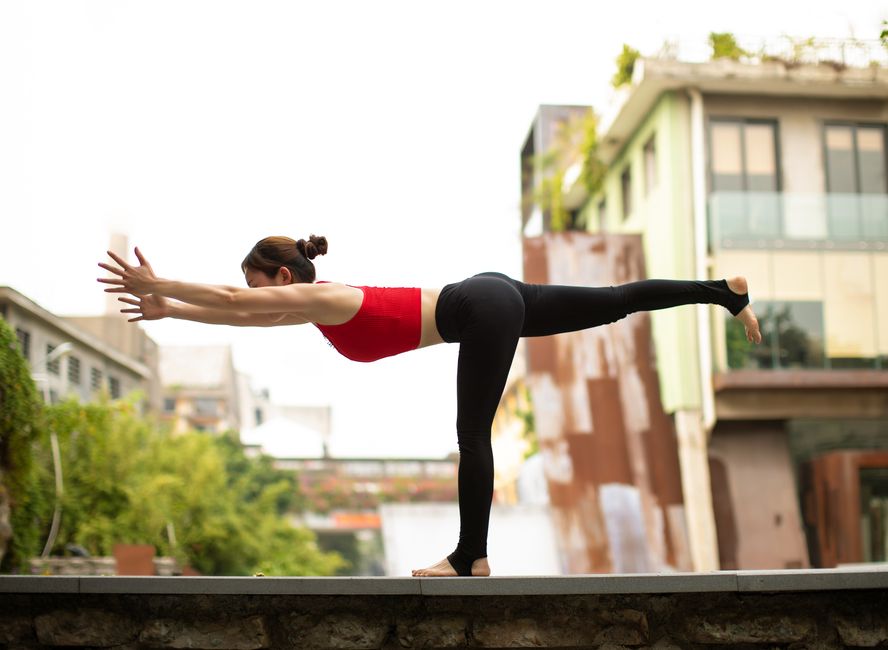
More importantly, the app’s video pacing is rushed. Beginner flows move through poses too quickly. There’s minimal alignment cueing. No mention of modifications for tight hamstrings, wrist pain, or knee issues. I watched a “Beginner Morning Flow” video where the instructor moved from Downward Dog to Warrior II in under 10 seconds with zero verbal cues about foot placement or hip alignment.
That’s how beginners get hurt. Not dramatically. Just slowly, through repeated micro-misalignments that turn into wrist strain or lower back tightness.
If you’re a complete beginner, you need an instructor who explains why your foot should be at a 45-degree angle, not one who says “step your foot forward and open your hips” while the camera angle hides their feet.
The Free Alternative That’s Actually Better
Yoga with Adriene is the obvious answer here, but let me be specific about why it’s better, not just cheaper.
Adriene Mishler has been uploading free yoga videos to YouTube since 2012. She has over 12 million subscribers. Her “30 Days of Yoga” series is the gold standard for beginners. Each video is 20-35 minutes, filmed with clear camera angles, and includes constant verbal cues about breath, alignment, and modifications.
Here’s what you get for $0:
- 30 Days of Yoga — a structured 30-day program designed for absolute beginners
- Yoga for Beginners — a 41-video playlist covering individual poses, breath work, and short flows
- Yoga for Back Pain, Yoga for Anxiety, Yoga for Wrist Pain — targeted practices for specific issues
- New videos weekly, no subscription, no account required
The production quality is better than Yoga-Go’s. The instruction is more detailed. And you can’t accidentally get charged $19.99 because you forgot to cancel a free trial.
If you want a paid app, skip Yoga-Go and get Down Dog. It’s $9.99/month or $59.99/year, and it actually delivers on the personalization promise. You set your level, time, focus area, voice, music, and pace. The app generates a unique sequence every time. It’s the app Yoga-Go pretends to be.
What You Actually Need to Start Yoga at Home
Let’s talk about gear, because this is where beginners waste more money than on any app.
You need exactly three things:
- A yoga mat that doesn’t slip. The Liforme Yoga Mat ($140) is the best I’ve used, but it’s overkill for a beginner. The Gaiam Premium 6mm mat ($29.99) is fine. The key is thickness (6mm minimum for knee comfort) and grip (avoid cheap PVC mats that get slippery with sweat).
- Comfortable clothes that don’t restrict movement. You don’t need Lululemon. Old sweatpants and a t-shirt work. Avoid anything with zippers or buttons that dig into your back during floor poses.
- A phone or laptop stand. You’re watching videos. Prop your phone on a chair, stack of books, or a $15 adjustable phone stand. Don’t crane your neck.
That’s it. No blocks, no straps, no $100 yoga pants. Blocks are nice later. Straps are useful if you have tight hamstrings. But you can use a thick book instead of a block and a towel instead of a strap for your first month.
The biggest mistake beginners make is buying gear before building a habit. Spend $30 on a mat. Practice for two weeks. Then decide if you want to invest more.
Beginner Yoga Mistakes That Cause More Harm Than Good
I’ve watched too many people quit yoga because they pushed too hard on day one. Here are the mistakes I see constantly, and how to avoid them.
Chasing the “perfect” pose
Yoga is not gymnastics. Your Downward Dog will look nothing like the instructor’s for months. That’s fine. The pose is working even when your knees are bent and your heels are off the floor. Focus on the sensation, not the shape.
Holding your breath
This is the most common beginner mistake. You’re so focused on getting the pose right that you forget to breathe. If you’re holding your breath, you’re not doing yoga. You’re doing stretching. The breath is the practice.
Skipping the warm-up
Cold muscles don’t stretch. They tear. Always start with 3-5 minutes of gentle movement — cat-cow, shoulder rolls, neck circles — before attempting any deep stretches.
Ignoring wrist pain
If your wrists hurt in Downward Dog or Plank, your weight is too far forward. Shift your hips back. Press through your fingertips. If pain persists, do poses on your forearms instead. Wrist pain is a signal, not something to push through.
Here’s the truth: yoga shouldn’t hurt. Discomfort, yes. Sharp pain, no. If something hurts, stop. Modify. Ask for help. The ego is the only thing that gets injured in yoga.
My Verdict: Skip Yoga-Go, Start With This Plan
If you’re a beginner who wants to try yoga at home, here’s exactly what I’d tell a friend:
Don’t download Yoga-Go. Don’t pay $19.99 for content that’s worse than free alternatives. Go to YouTube, search “Yoga with Adriene 30 Days of Yoga,” and do day one today. It’s 35 minutes. It’s free. It’s better instruction than anything Yoga-Go offers.
If you finish 30 days and want more structure, subscribe to Down Dog for $9.99/month. It’s the best paid yoga app on the market, and it’s half the price of Yoga-Go.
If you want in-person instruction, find a beginner class at a local studio. Most studios offer $20-30 intro weeks. A live teacher who can see your alignment and offer corrections is worth more than any app.
But whatever you do, start today. Not tomorrow. Not after you buy the right mat. Today. On your carpet. In your pajamas. The best yoga practice is the one you actually do.